


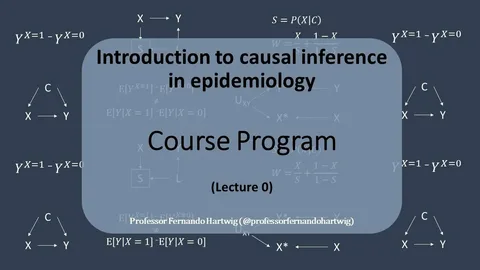
In the ever-evolving world of data science, understanding why something happens is often more potent than merely knowing what happened. This is where causal inference becomes a crucial pillar of analysis. Unlike traditional predictive analytics, which focuses on correlations and associations, causal inference aims to identify and quantify the cause-and-effect relationships that govern real-world phenomena. For any aspiring professional enrolled in a Data Science Course, mastering the principles of causal inference can open doors to more impactful decision-making, particularly in domains like healthcare, economics, marketing, and public policy.
Understanding the Foundations of Causal Inference
At its core, causal inference seeks to answer questions like: Does a new drug improve patient outcomes? Does a discount increase product sales? Will launching a marketing campaign in a specific region lead to higher customer engagement? These are questions that go beyond the predictive realm and venture into the causal.
The key idea is to estimate the effect of a treatment or intervention (like a new product feature or policy change) on an outcome of interest (like user retention or revenue). To do this, data scientists must isolate the causal effect from the noise of confounding factors — variables that may distort the true relationship between cause and effect.
Why Correlation Isn’t Enough?
One of the first lessons in statistics is that correlation does not imply causation. For instance, there may be a strong correlation between ice cream sales and drowning incidents, but the underlying factor is the temperature—people swim and buy ice cream more often during hot weather. This confounder illustrates the danger of jumping to conclusions based solely on observational data.
Causal inference provides the methodological framework to deal with these complexities, often through sophisticated techniques that attempt to simulate randomised controlled trials (RCTs) using observational data.
Key Concepts and Techniques in Causal Inference
Several fundamental concepts are essential for any data scientist interested in causal inference:
1. Counterfactuals
The counterfactual is the hypothetical scenario of what would have happened if the intervention had not occurred. Since we cannot observe both the treated and untreated outcomes for the same individual, causal inference methods aim to estimate the counterfactual to determine the causal effect.
2. Randomised Controlled Trials (RCTs)
RCTs are considered the gold standard for causal inference. Participants are randomly assigned to treatment or control groups, ensuring that confounding variables are evenly distributed. However, RCTs are often costly, time-consuming, or ethically impossible in many practical settings.
3. Observational Studies and Adjustments
Since RCTs are not always feasible, much of causal inference in data science relies on observational data. Methods such as propensity score matching, instrumental variables, difference-in-differences, and regression discontinuity are used to adjust for confounders and approximate the conditions of an RCT.
4. Directed Acyclic Graphs (DAGs)
DAGs are visual tools that help in understanding causal structures among variables. They assist in identifying confounding variables, mediators, and colliders, which guide the choice of appropriate statistical methods to infer causality.
5. Do-Calculus and Structural Causal Models (SCMs)
Developed by Judea Pearl, these formal systems provide a mathematical basis for reasoning about interventions and causal relationships. SCMs describe how variables interact and how interventions change outcomes, while do-calculus helps answer “what if” scenarios.
Practical Applications in Industry
Causal inference is increasingly being applied across industries:
- Healthcare: Estimating the effect of treatments or lifestyle changes on patient outcomes.
- Marketing: Measuring the impact of advertising campaigns or promotions on consumer behaviour.
- Finance: Evaluating how changes in interest rates or policies influence markets.
- Public Policy: Determining the effects of government programs on social outcomes like education or employment.
A mid-level module in a Data Science Course often introduces these applications through case studies and projects, helping learners see the real-world utility of causal methods.
Challenges in Causal Inference
Despite its potential, causal inference comes with its own set of challenges:
- Confounding Bias: Not all confounders are observed or measured, which can lead to biased results.
- Selection Bias: When data is not randomly sampled, the estimates may not generalise to the larger population.
- Measurement Error: Inaccurate or noisy data can distort the estimation of causal effects.
- Model Dependence: Causal conclusions are often sensitive to the assumptions made during model specification.
To address these, practitioners must rigorously validate their assumptions and often rely on sensitivity analysis to evaluate how robust their results are to different conditions.
Causal Inference vs Predictive Modelling
While predictive modelling focuses on forecasting outcomes based on patterns in data, causal inference dives deeper into understanding the underlying mechanisms. For example:
- Predictive: “Who is likely to churn?”
- Causal: “Will offering a discount reduce churn?”
In modern organisations, both capabilities are essential. Predictive models guide immediate decisions, while causal insights drive strategic policies and long-term planning.
For learners pursuing a Data Scientist Course in Hyderabad, this distinction is often a focal point in advanced modules that emphasise strategic analytics, experimentation, and real-world impact.
Tools and Libraries for Causal Inference
The growing importance of causal inference in data science has led to the development of numerous tools and libraries:
- DoWhy (Python): A framework for causal inference based on DAGs and potential outcomes.
- CausalImpact (R/Python): Developed by Google for inferring the effect of an intervention using Bayesian structural time-series models.
- EconML (Microsoft): Designed to estimate heterogeneous treatment effects using machine learning.
- Zelig and MatchIt (R): Used for causal modelling and matching techniques, respectively.
These tools simplify complex techniques and make causal analysis more accessible to data scientists.
Conclusion: The Value of Thinking Causally
In an age where data drives decisions across every sector, understanding causality is not just an academic exercise—it’s a business imperative. Whether you’re optimising product strategies, evaluating policy interventions, or diagnosing performance issues, the ability to uncover authentic cause-and-effect relationships sets expert data scientists apart.
For those enrolled in a Data Scientist Course in Hyderabad, acquiring expertise in causal inference will be a career-defining skill. It enables practitioners to go beyond surface-level analysis and make decisions that are not only data-driven but also impactful, strategic, and defensible. As data continues to shape the world, causal thinking will become an essential mindset for future-ready data professionals.
ExcelR – Data Science, Data Analytics and Business Analyst Course Training in Hyderabad
Address: Cyber Towers, PHASE-2, 5th Floor, Quadrant-2, HITEC City, Hyderabad, Telangana 500081
Phone: 096321 56744
