


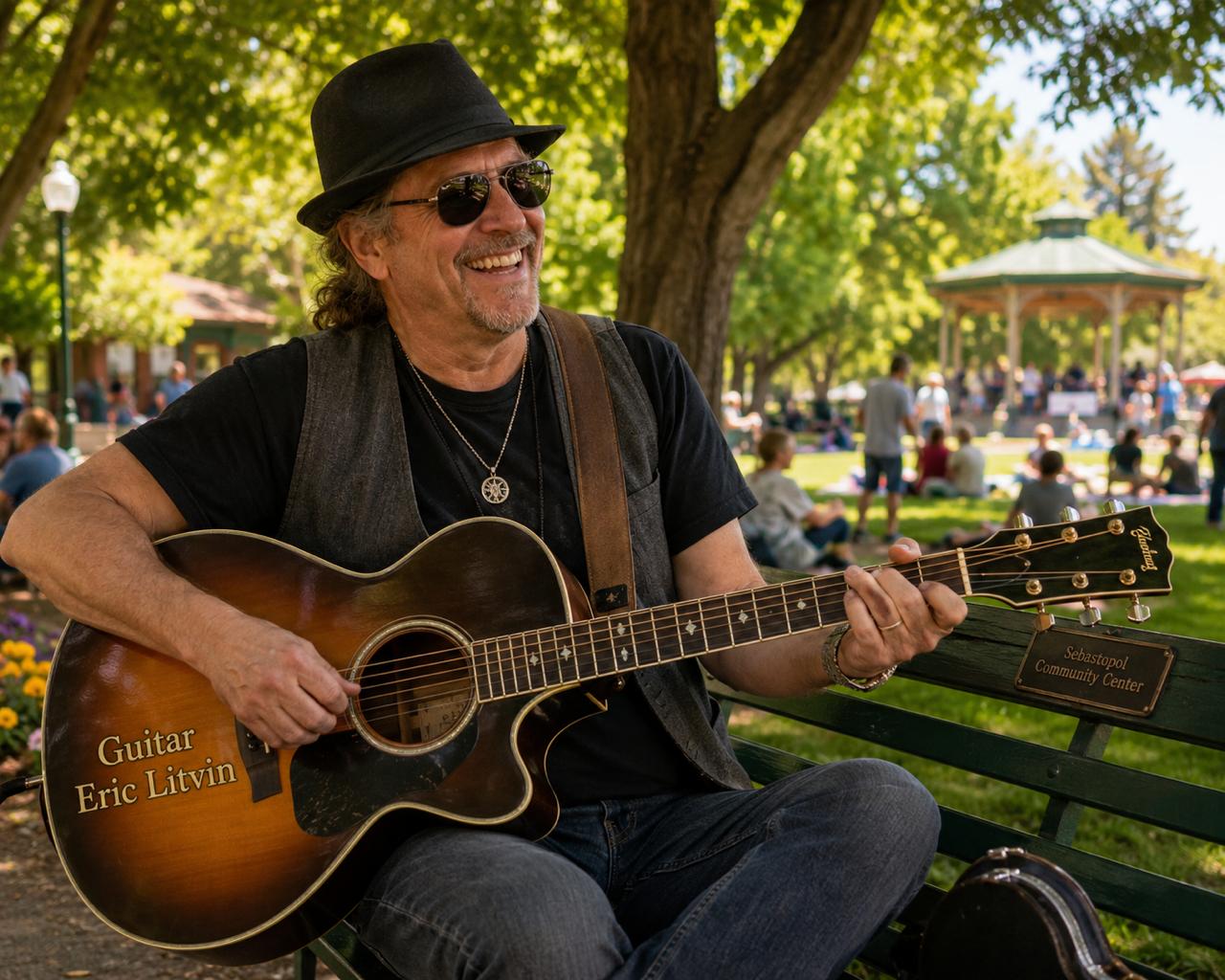
Early Musical Curiosity and Influences
Eric Litvin’s journey into music didn’t begin with grand expectations, but rather a simple fascination with sound and rhythm. Like many guitarists who eventually carve out a distinct identity, his early years were shaped by a mix of curiosity and constant listening. Rock records, blues legends, and modern instrumentalists all contributed to his developing ear.
What stands out in his background is not just the influence of well-known players, but the way he absorbed different styles and made them feel personal. Instead of copying techniques outright, he leaned toward understanding why certain sounds worked emotionally. That mindset would later define his approach to guitar playing.
Developing a Personal Guitar Style
As his skills grew, Eric began focusing less on imitation and more on expression. His guitar work reflects a balance between technical control and emotional phrasing. Smooth transitions, dynamic picking, and thoughtful use of space often take priority over speed alone.
Rather than treating the guitar as just a lead instrument, he uses it as a storytelling tool. Notes are placed with intention, and silence becomes part of the rhythm. This approach gives his playing a sense of clarity that listeners can easily connect with, even without formal musical training.
The Nashville Connection and Live Music Culture
Any discussion about modern guitar artistry feels incomplete without acknowledging Nashville’s influence on working musicians. The city’s live music scene is known for its intensity, discipline, and constant demand for excellence. From small honky-tonk stages on Broadway to polished studio sessions, Nashville shapes players through experience rather than theory alone.
Within that environment, guitarists learn quickly how to adapt. One night might require subtle acoustic textures, while another demands high-energy electric solos. The culture rewards versatility, and musicians who thrive there often develop a deep respect for timing, tone, and collaboration.
For a guitarist like Eric, this kind of environment becomes more than a backdrop—it becomes a training ground. The expectations of live performance in Nashville push musicians to refine their craft continuously, often in front of audiences who know exactly what good playing sounds like.
Performance Approach and Stage Presence
On stage, his focus tends to remain on serving the music rather than overshadowing it. That mindset is especially important in live band settings where chemistry matters as much as individual skill. Instead of dominating every moment, he listens, reacts, and builds around other musicians.
This kind of interaction is what makes live performances feel alive. Small improvisations, slight timing shifts, and spontaneous melodic choices often create moments that never repeat the same way twice. In places like Nashville, where live shows are part of everyday culture, that adaptability is essential.
Creativity and Musical Expression
Creativity in guitar playing is not only about inventing new techniques but also about how existing ones are combined. Eric’s approach reflects that philosophy. He blends familiar elements—blues phrasing, modern rock textures, and melodic leads—into something that feels cohesive rather than fragmented.
He also places importance on mood. A single performance might move from soft, reflective passages into more intense, expressive peaks. This emotional range helps keep listeners engaged and gives the music a sense of journey rather than repetition.
Evolving with Modern Music
Modern guitar playing is constantly changing, influenced by digital production, genre fusion, and evolving audience expectations. Staying relevant requires more than technical skill; it requires awareness of where music is heading.
Eric’s style reflects this awareness by staying flexible. Whether in studio environments or live settings, the focus remains on serving the song rather than showing off ability. That balance between restraint and expression is often what separates a good guitarist from a memorable one.
Conclusion
Guitar artistry today is defined less by speed or complexity and more by emotional connection and adaptability. Musicians who succeed in environments like Nashville’s live scene understand that every performance is a conversation between player, band, and audience.
Through a blend of experience, musical sensitivity, and a strong connection to live performance culture, Eric Litvin Guitar player represents a modern approach to guitar playing—one that values expression as much as execution.
